
Alternative Investments Conference offers students a different path to success
Despite rising interest rates and slowing economic growth, one sector of investments continues to capture a growing share of the market.
“The alternatives industry has been growing dramatically, so it's just creating more firms and more capital,” said Josh Blaine (BSM ’99), senior managing director and head of G.P. stakes at Blackstone Strategic Partners. “There are real tailwinds around the trend of capital shifting from traditional asset managers to alternative asset managers.”
Blaine was one of more than 20 investors, private equity executives and hedge fund managers who visited the Freeman School of Business on Oct. 23 to share their perspectives with students at the third annual Freeman Alternative Investments Conference.
The conference, made possible by the Aaron Selber Jr. Alternative Investments Endowed Fund, with support from the Schwartz Family Center for Experiential Business Learning, was launched to introduce students to emerging trends in alternative investments. This year’s event featured sessions on getting into the alternatives industry, private equity in a higher-rate world, private credit markets and more. In addition to Blackstone, companies represented included Apollo, Equitas Capital Advisors, LongueVue Capital, Goldman Sachs and Fortress Investment Group and Orangewood Partners
For the students involved, the conference was more than a one-day event. It was a weeks-long experiential learning project. Students were responsible for sourcing the moderators, developing questions for the panelists and managing day-of operations throughout the event.
Jacob Cook (BSM ’27) organized a panel discussion on investment opportunities around AI. While he spent much of the morning checking in more than 200 student attendees and helping to answer questions, he also made time to connect with speakers and gain insights from the panelists.
“The conference helped me realize just how broad the alternative investments industry really is,” Cook said. “Hearing from professionals with different backgrounds gave me a better understanding of the many ways investors identify and evaluate opportunities.”
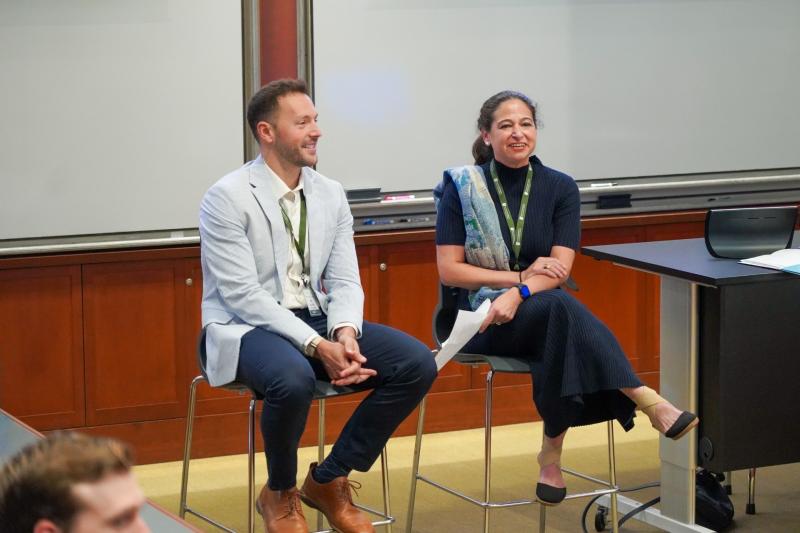
Jake Kriegsfeld (BSM ’13), managing director of Tulane University’s Investment Management Office and a leader overseeing the Tulane Endowment Fund, was one of the panelists who discussed those opportunities. For students preparing to enter the field, he said that while alternative investments can offer attractive returns, their illiquidity and varied risk profiles require significant expertise and careful selection.
“Alternative is like the black diamond area of investing,” Kriegsfeld said. “You’ve got to really know what you’re doing, or you may end up hurt. We try to be very selective about where we want to play and why.”
Joining Kriegsfeld for the opening keynote session was Mara Baumgarten Force, professor of practice in finance, who oversaw the students who organized the event.
“The conference exposes students to some of the best and brightest investors in the alternatives industry,” Force said. “It allows them to interact directly with senior level professionals and learn about the industry, current trends and what it takes to succeed.”
And what does it take to succeed? Several speakers said personal characteristics like attitude, emotional intelligence and integrity can be even more important than financial skills to ensure a successful career.
“Investing is a people business; the people are first and foremost the most important thing,” Blaine said. “The only thing we can control is our own reputation, our own brand, and to take that seriously. I always want to protect my personal reputation by doing what I say and treating people the way I want to be treated.”
Jon Litt, founder and chief investment officer for Land and Buildings, shared a similar sentiment while discussing activist investing. To effect change, an activist investor must make a compelling case and persuade other shareholders to support their position.
“The key to being successful is to be credible.” Litt said. “You can't unilaterally make a decision. You have to get the other shareholders to agree with you. To get them to agree with you, they have to think you’re credible and that you’ve been there before.”
The conference concluded with a networking social, giving students the opportunity to speak one-on-one with presenters and put into practice the soft skills emphasized throughout the day.
“Each of the speakers sat with students, talked to them, treated them like adults, listened to them, gave them confidence, advice and words that will guide them,” Force said. “It was invaluable and demonstrates the best of everything Tulane seeks to instill in our graduates.”
Interested in advancing your education and/or career? Learn more about Freeman’s wide range of graduate and undergraduate programs. Find the right program for you.
Recommended Reading
- Pros and Cons of Tariffs: What Finance Professionals Need to Know
- What Does a Controller Do?
- MBA vs. Master’s in Finance: Key Differences
- Investment Banker: Salary, Job Description, and Requirements
- How to Get Started in Sustainable Finance
- What Does It Take to Work in Government Accounting?
- Finance Curriculum vs. Accounting Curriculum: How Are They Different?
- Business Analytics vs. Finance: Which Master’s Degree Is Right for You?
Other Related Articles
- The Times-Picayune: 115-year-old Pan-American Life Insurance Group on track to surpass $2B in revenue
- Experts weigh in on the future of consulting
- For EMBA student, program is all about the journey
- S&P Global: US oil majors cast doubt on feasibility of net zero by 2050
- The Wall Street Journal: Selloff in U.S., European Government Bonds Deepens
- The Mirror: Oil and diesel crisis from Iran and Ukraine wars could last years, energy expert warns
- MarketWatch: Saudi Arabia may be just days away from not being able to export much oil
- The Center Square: Energy Department reports sinking U.S. fuel, diesel demand